
By Dr. Elizabeth Roberts, Psychologist
Reading time: 5 minutes
December in schools has a very particular energy. It’s loud, busy, and full of half-glittered art projects, last-minute events, unexpected schedule changes, and a collective buzz that everyone feels.
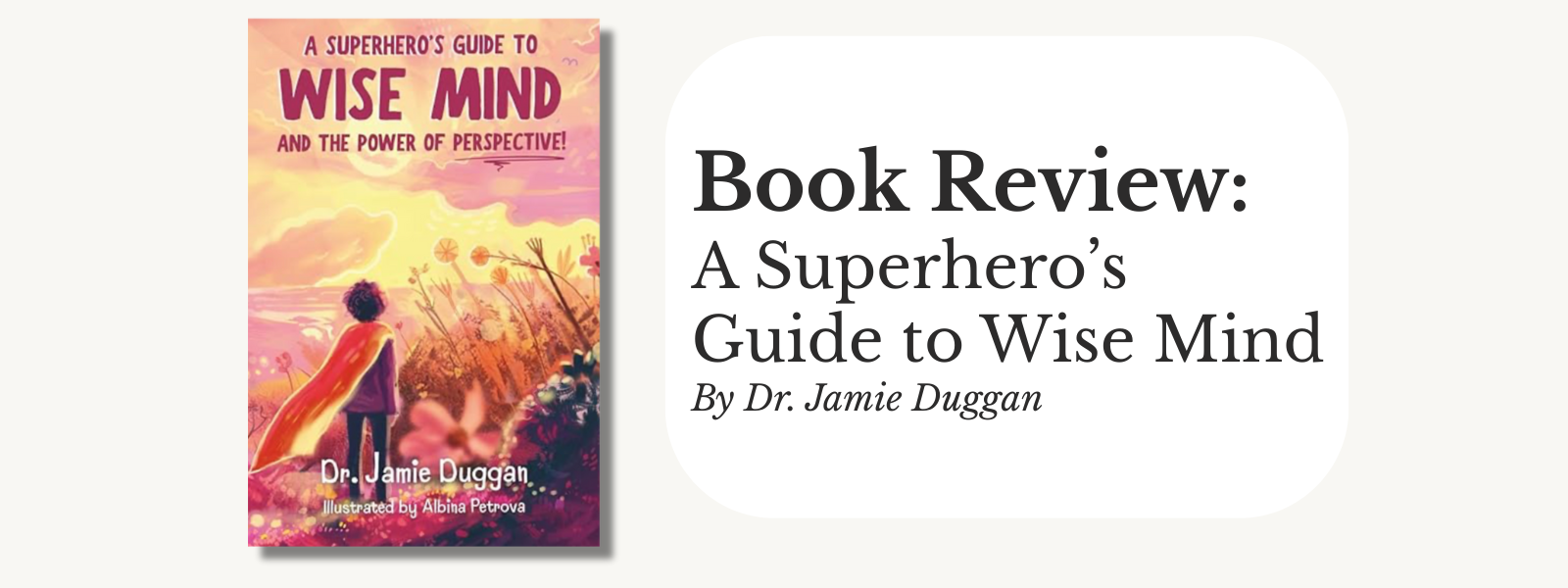
When I picked up A Superhero’s Guide to Wise Mind and the Power of Perspective! by Dr. Jamie Duggan, it instantly struck me as the perfect way to bring Stoicism and emotional clarity into the classroom.
If you remember from my last post, Stoicism is ultimately about emotional clarity and decision making: noticing what’s happening inside you, choosing how to respond, and staying grounded when life pulls you in every direction. This little book teaches children exactly that… with capes, sidekicks, and a whole lot of heart. (It may help the grown-ups stay sane, too.)
➡️ Buy the book here on Amazon
➡️ Dr. Jamie Duggan's website
Reading time: 5 minutes
December in schools has a very particular energy. It’s loud, busy, and full of half-glittered art projects, last-minute events, unexpected schedule changes, and a collective buzz that everyone feels.
When I picked up A Superhero’s Guide to Wise Mind and the Power of Perspective! by Dr. Jamie Duggan, it instantly struck me as the perfect way to bring Stoicism and emotional clarity into the classroom.
If you remember from my last post, Stoicism is ultimately about emotional clarity and decision making: noticing what’s happening inside you, choosing how to respond, and staying grounded when life pulls you in every direction. This little book teaches children exactly that… with capes, sidekicks, and a whole lot of heart. (It may help the grown-ups stay sane, too.)
➡️ Buy the book here on Amazon
➡️ Dr. Jamie Duggan's website
The Story: Three Minds, Three Superpowers
The book introduces three inner “superheroes” that we all embody at different moments:
1. Captain Clarity — The Reasonable Mind 🧠
Ever had a student insist your math solution is wrong? Or remind you the schedule changed before the office even announced it? That’s pure Captain Clarity energy.
These students love rules, precision, structure, and noticing details the rest of us miss. Their brains are genuinely wired for accuracy. With the right framing, this becomes a tremendous strength — these kids keep the class on track, innovate, and often push for better systems.
2. Emotional Explorer — The Emotional Mind ❤️
These are your deeply feeling kiddos — expressive, sensitive, intuitive, passionate.
In December? Their emotional world is set to a full 10/10: excitement, overwhelm, sugar highs, heartbreak, anticipation. They are super-sensors — a Ferrari engine of emotion, especially when fueled by hot chocolate and holiday concerts.
I love discussing with kids (and adults) how we swing between these modes, often defaulting to one under stress. Knowing this can help begin to create what psychologists call an observing ego: the ability to step back, understand our internal state, and respond with intention.
Which brings us to…
3. Wise Wizard — The Wise Mind
Wise Wizard is the magic that appears when emotion and reason work together.
It’s the same idea as Plato’s “rider and horse” analogy:
When the rider pulls too tightly, the horse freezes.
When the horse sprints without direction, it strays off the path.
When the two work together, the horse moves with momentum and focus. The rider loosens the reins just enough, and the horse carries the pair forward with power.
That's the power of wise mind 🧠💖
1. Captain Clarity — The Reasonable Mind 🧠
Ever had a student insist your math solution is wrong? Or remind you the schedule changed before the office even announced it? That’s pure Captain Clarity energy.
These students love rules, precision, structure, and noticing details the rest of us miss. Their brains are genuinely wired for accuracy. With the right framing, this becomes a tremendous strength — these kids keep the class on track, innovate, and often push for better systems.
2. Emotional Explorer — The Emotional Mind ❤️
These are your deeply feeling kiddos — expressive, sensitive, intuitive, passionate.
In December? Their emotional world is set to a full 10/10: excitement, overwhelm, sugar highs, heartbreak, anticipation. They are super-sensors — a Ferrari engine of emotion, especially when fueled by hot chocolate and holiday concerts.
I love discussing with kids (and adults) how we swing between these modes, often defaulting to one under stress. Knowing this can help begin to create what psychologists call an observing ego: the ability to step back, understand our internal state, and respond with intention.
Which brings us to…
3. Wise Wizard — The Wise Mind
Wise Wizard is the magic that appears when emotion and reason work together.
It’s the same idea as Plato’s “rider and horse” analogy:
- Reason (the rider) brings direction.
- Emotion (the horse) brings energy and vitality.
When the rider pulls too tightly, the horse freezes.
When the horse sprints without direction, it strays off the path.
When the two work together, the horse moves with momentum and focus. The rider loosens the reins just enough, and the horse carries the pair forward with power.
That's the power of wise mind 🧠💖
Why This Book Matters So Much in December
December pushes all of us — students, teachers, and of course, dear colleagues — into extremes.
Teachers see it daily:
Helping students name, notice, and make meaning of their internal worlds is one of the most powerful forms of prevention. This book does exactly that. It gives children (and adults) the language to understand that:
This is the heart of both Stoicism and trauma-informed practice: Feel fully, respond wisely.
Teachers see it daily:
- tears during transitions
- excitement that morphs into impulsivity
- clinginess
- shutdowns
- sudden vocal complaints
- “acting out” that’s really overwhelm
- kids who eat a cookie and refuse all tasks with the confidence of a CEO
Helping students name, notice, and make meaning of their internal worlds is one of the most powerful forms of prevention. This book does exactly that. It gives children (and adults) the language to understand that:
- emotions aren’t wrong,
- reason isn’t superior, and
- their power comes from working together.
This is the heart of both Stoicism and trauma-informed practice: Feel fully, respond wisely.
How Teachers Can Use This Book in December
1. Morning Meeting Read-Aloud
A quick reminder that you don't practice a sport during the playoffs. The same is true for emotion regulation skills. This book is a perfect grounding story to start the day with calm and meaning. Help students center before the busyness and big feelings begin.
Emotion regulation skills need to be taught long before a meltdown. A book like this builds that foundation gently.
2. Create a “Where Am I Today?” Chart
Invite students to place their name under:
This normalizes emotional variability: something we all experience based on stress, capacity, sensory load, or the chaos of December motion.
3. Use the Characters in Tricky Moments
“Looks like you’re having a big Emotional Explorer moment, what would Wise Wizard suggest?”
Kids love stepping into character roles. It adds lightness to moments that might otherwise feel heavy, and harnesses a teaching modality that really works: Play.
4. Pair It With Teacher Reflection
Are you brave enough to admit to students: Which superhero you are operating from right now?
December brings emotional intensity to adults, too. Modeling isn’t about perfection, it’s about naming our own arcs: “I felt stressed… I paused… I chose differently.” This is co-regulation at its best.
A quick reminder that you don't practice a sport during the playoffs. The same is true for emotion regulation skills. This book is a perfect grounding story to start the day with calm and meaning. Help students center before the busyness and big feelings begin.
Emotion regulation skills need to be taught long before a meltdown. A book like this builds that foundation gently.
2. Create a “Where Am I Today?” Chart
Invite students to place their name under:
- Captain Clarity
- Emotional Explorer
- Wise Wizard
This normalizes emotional variability: something we all experience based on stress, capacity, sensory load, or the chaos of December motion.
3. Use the Characters in Tricky Moments
“Looks like you’re having a big Emotional Explorer moment, what would Wise Wizard suggest?”
Kids love stepping into character roles. It adds lightness to moments that might otherwise feel heavy, and harnesses a teaching modality that really works: Play.
4. Pair It With Teacher Reflection
Are you brave enough to admit to students: Which superhero you are operating from right now?
December brings emotional intensity to adults, too. Modeling isn’t about perfection, it’s about naming our own arcs: “I felt stressed… I paused… I chose differently.” This is co-regulation at its best.
Who I Recommend This Book For
- K–6 teachers
- School psychologists
- Resource teachers
- SEL instructors
- Parents of sensitive or observant kids
- Kids with big emotions or rigid thinking
- Adults (who are just big kids, really)
Final Thoughts
This book reminds us that wisdom isn’t quiet because emotion is bad (even anger), or reason is too blunt, it’s quiet because calm helps us hear both emotion and reason at the same time.
If you want a children’s book that teaches emotional clarity without shame, without oversimplifying, and without “just calm down” messaging, this is it.
A perfect Wise Mind moment for December... and beyond.
➡️ A Superhero’s Guide to Wise Mind and the Power of Perspective! by Dr. Jamie Duggan
If you want a children’s book that teaches emotional clarity without shame, without oversimplifying, and without “just calm down” messaging, this is it.
A perfect Wise Mind moment for December... and beyond.
➡️ A Superhero’s Guide to Wise Mind and the Power of Perspective! by Dr. Jamie Duggan
Subscribe to the Village Psychology newsletter for weekly teacher-friendly psychology tools that help students feel safe, seen, and supported.
GET IT HERE
GET IT HERE